Study at Divine Mercy Kathagutari Technical Training Institute, a Catholic TVET college based in Siakago, Embu County, welcoming learners from every county in Kenya, and graduate with practical skills employers and customers trust nationwide.
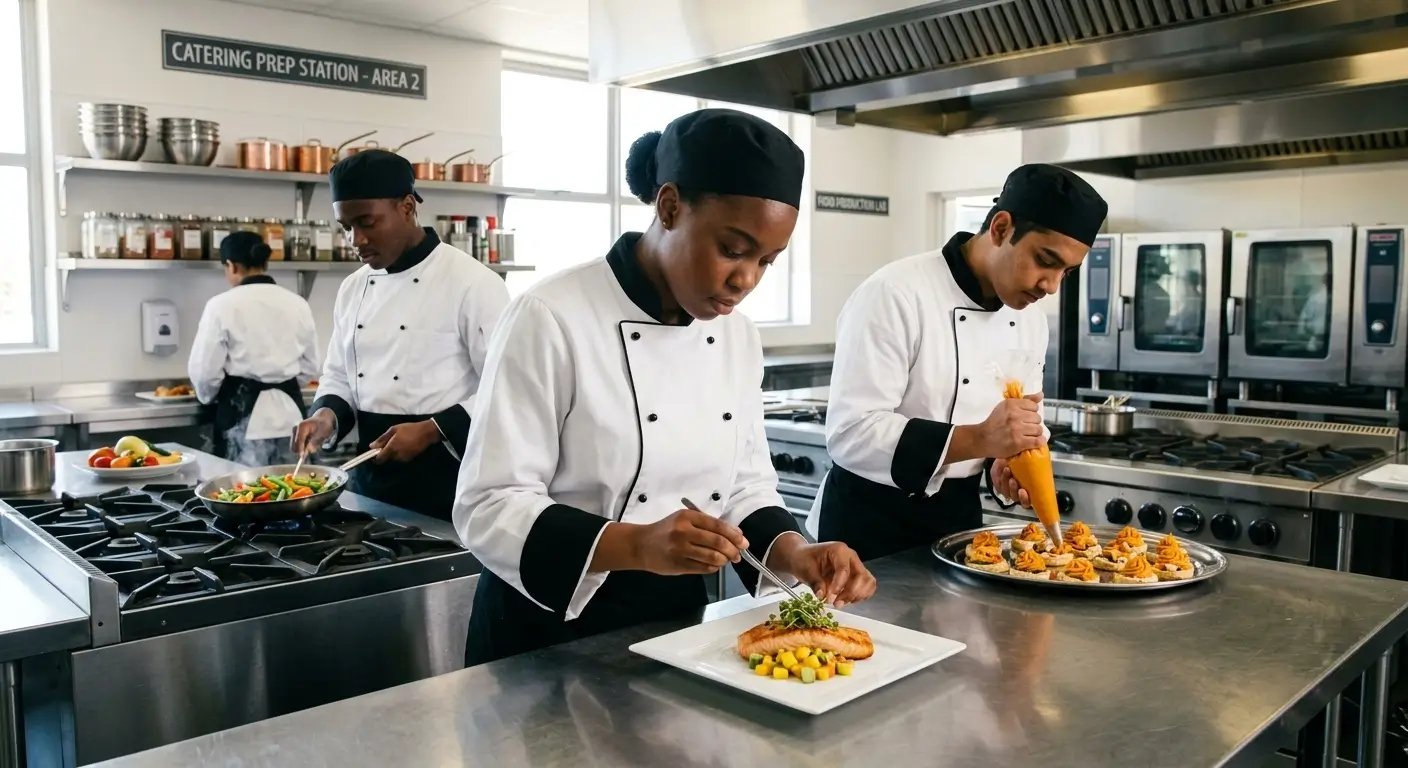
Catering & Food Production at DMKTTI prepares you for a career in hospitality and food service. You learn food preparation, baking and pastry, nutrition, kitchen safety and hygiene, food presentation, menu planning and catering management in a working practical kitchen.
You graduate able to cook to a professional standard, cost a menu, manage a kitchen team and serve customers well, whether in a hotel, restaurant, institution or your own food business.
Hotels, lodges, restaurants, schools, hospitals, institutions and event caterers all need trained cooks and kitchen staff.
Weddings, graduations, church functions, conferences and corporate events provide recurring catering work.
Baking, snacks, packed meals and outside catering can start from a home kitchen and grow into a brand.
Employers and customers prefer people trained in food safety, presentation and costing.
Knife skills, cooking methods and balanced dishes.
Breads, cakes, pastries and desserts.
Planning healthy, balanced meals.
Safe handling, storage and sanitation.
Plating and serving for impact.
Designing and costing profitable menus.
Organising events, staff and supplies.
Front-of-house etiquette and hospitality.
Choose the level that matches your KCPE/KCSE or KCSE grade. You can start at Grade 3 or Level 4 and progress to higher levels in the same trade. Confirm the current intake and level availability with the Admissions Office.
| Qualification | Entry requirement | Typical duration | Awarding / exam body |
|---|---|---|---|
| Food Technology – Level 6 | C− and above | 3 Years | NITA / CDACC |
| Food & Beverage Production (Culinary Arts) – Level 5 | D+ and D plain | 2 Years | NITA / CDACC |
| Food & Beverage Production (Culinary Arts) – Level 4 | D− and E | 1 Year | NITA / CDACC |
Hotels, restaurants and institutions.
Weddings, events and corporate functions.
Bakeries, cafés and your own bakery.
Lead kitchen or service teams.
Run a café, food stall or catering brand.
Many graduates in Catering & Food Production choose self-employment. Ideas to start with: start an events catering business; open a bakery or café; supply packed lunches to offices and schools; run a food stall or takeaway; offer cooking and baking classes.
Workshops and labs are part of the timetable from the start, so you finish with demonstrable skill and not only theory.
Courses are examined through NITA / CDACC, so your certificate is valid across Kenya, whether you work in Nairobi, Mombasa, Kisumu, Nakuru or your home county.
As a Catholic institution guided by the motto “Growth to Responsibility”, we form character alongside competence: discipline, honesty and respect for clients.
Every student gains workplace experience, builds references and often a first client list before graduating.
From Grade 3 (KCPE/KCSE) to Level 6, you can start where your grades allow and climb as you grow.
Our campus is in Siakago, Embu County, and we welcome applicants from every county. Your certificate is a national qualification that works wherever you choose to work.
The flagship programme runs from 6 months to 1 year. Accredited qualifications run from 1 year (Level 4) to 3 years (Food Technology Level 6).
Level 4 requires D− and E, Level 5 requires D+ and D plain, and Level 6 requires C− and above.
Yes. Training takes place in our practical kitchen, followed by industrial attachment.
Yes. Menu planning, costing and catering management are part of the course.
Yes. Courses are examined through NITA / CDACC.
Apply online through the Admissions page. Intakes run in January, May and September.